info.cocochembv@gmail.com
 USA / Netherlands

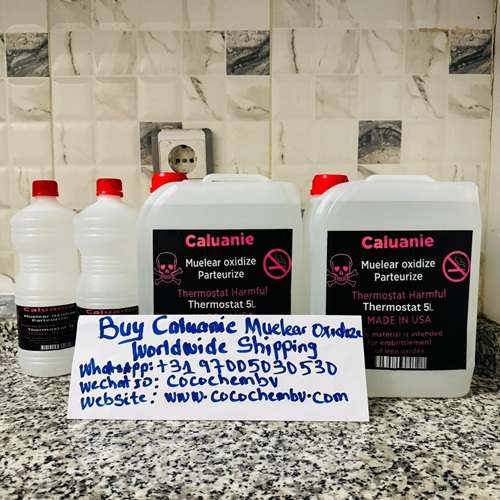
Caluanie Muelear Oxidize” is a trade name that appears online with inconsistent chemical descriptions and documentation. Buyers should therefore treat product identity—not the marketing name or claimed “grade”—as the starting point for qualification. Do not accept an asserted purity, CAS number, hazard classification, or application without documentation that can be independently verified.
Key Takeaways
- A legitimate procurement specification should begin with verified chemical identity, not simply the phrase “Grade A.”
- A credible Certificate of Analysis (COA) should be traceable to a defined production lot and supported by appropriate analytical data.
- A current Safety Data Sheet (SDS) should identify the product consistently with its label, COA, transport documentation, and regulatory status.
- U.S. importers should assess applicable TSCA requirements before importing chemical substances. EPA states that imported chemical substances generally require the appropriate TSCA certification, while new chemical substances can trigger premanufacture requirements.
- European buyers should assess applicable REACH/CLP obligations and ensure that hazardous substances and mixtures are supplied with appropriate hazard communication.
- Packaging, labeling, documentation, transport classification, and traceability are just as important as the material inside the container.
- For international purchasing, the safest strategy is to qualify the supplier and documentation before committing to a large commercial shipment.
Defining High-Grade Caluanie Muelear Oxidize in Global Chemical Procurement
Industrial chemical buyers often encounter phrases such as “high grade,” “premium grade,” “99.9% purity,” or “Grade A.” These terms can sound authoritative, but they are not automatically recognized regulatory classifications.
For Caluanie Muelear Oxidize, this distinction is particularly important. The trade name is used inconsistently across online marketplaces and supplier listings, making it unsafe to determine quality from appearance, price, or a supplier’s product description alone.
A professional procurement specification should instead establish:
- Exact chemical identity.
- Chemical or trade name used consistently throughout the documentation.
- CAS Registry Number, where legitimately applicable.
- Composition and concentration.
- Physical and chemical specifications.
- Analytical test method.
- Lot or batch number.
- Manufacturing date and retest or expiry information, where applicable.
- Manufacturer identity and manufacturing location.
- Applicable hazard classification.
- Transportation classification.
- Country-specific regulatory status.
This approach turns an ambiguous marketplace product into a measurable procurement specification.
Why “Grade A” Should Not Be the Sole Quality Criterion
In food commodities, Grade A can correspond to a formal grading system. Industrial chemicals are different.
A supplier calling a chemical “Grade A” does not by itself establish that the material is chemically pure, correctly identified, legally importable, or suitable for a particular industrial process.
For procurement teams, documented identity and analytical conformity should take precedence over marketing terminology.
Technical Indicators of a High-Grade Chemical Product
1. Verify Chemical Identity Before Testing Purity
The first question should not be:
“Is it 99.9% pure?”
It should be:
“99.9% of what precisely?”
A numerical purity claim is meaningless if the underlying substance has not been correctly identified.
Request documentation that establishes the relationship between:
Product label → Product identifier → SDS → COA → Batch number → Shipping documents
Every element should describe the same material.
If a supplier provides different names, CAS numbers, compositions, or hazard classifications across those documents, the shipment should be placed on hold until the discrepancy is resolved.
For a product sold under a trade name such as Caluanie Muelear Oxidize, independent laboratory confirmation may be appropriate before approving a high-value purchase.
2. Review the Certificate of Analysis
A professional COA should be lot-specific rather than a generic document reused for every shipment.
At minimum, procurement teams should examine:
- Product identification.
- Batch or lot number.
- Test date.
- Manufacturing date, where applicable.
- Specification limits.
- Actual analytical results.
- Testing methodology.
- Laboratory or quality-control identification.
- Authorized approval or sign-off.
- Manufacturer information.
A strong COA allows the buyer to connect the analytical result to the physical shipment.
A generic PDF containing only a large purity percentage is not equivalent to a traceable lot-specific COA.
3. Do Not Substitute Appearance for Chemical Analysis
Color, viscosity, clarity, odor, or container appearance can sometimes provide useful screening observations, but they do not prove chemical identity or purity.
A material that visually resembles a supplier’s reference sample may still contain:
- Incorrect chemical components.
- Undisclosed solvents.
- Water or other contaminants.
- Degradation products.
- Residual manufacturing materials.
- A completely different substance marketed under the same trade name.
Visual inspection should therefore be treated as an incoming-quality check—not as a substitute for laboratory analysis.
4. Use Independent Verification for High-Value Shipments
When the commercial exposure is substantial, buyers can specify independent testing before accepting the shipment.
Depending on the substance’s verified identity and specification, an appropriately qualified laboratory may use analytical techniques capable of confirming composition and relevant impurities.
The exact analytical method should be selected by a qualified chemist or laboratory based on the verified chemical identity. It should not be invented from the trade name alone.
This is particularly important for products whose marketplace identity is inconsistent.
Certification and Regulatory Compliance: Beyond the Product Label
High-quality chemical procurement is not simply about receiving a container with the correct name printed on it.
The documentation surrounding that container must also withstand regulatory and commercial scrutiny.
U.S. Procurement: TSCA and Hazard Communication
For U.S. imports, buyers should determine whether the substance is subject to the Toxic Substances Control Act (TSCA) and what certification is required.
EPA explains that chemical imports generally require import certification under TSCA unless an applicable exclusion or other treatment applies. EPA also notes that TSCA defines “manufacture” to include importation, meaning a substance that is new to the TSCA Inventory can trigger premanufacture-notice requirements.
The official EPA TSCA import requirements should therefore be part of a U.S. importer’s qualification process.
For workplace hazard communication, OSHA requires chemical manufacturers and importers to evaluate hazards and provide appropriate labels and SDS information. OSHA’s Hazard Communication Standard uses a 16-section SDS structure.
An incoming shipment should therefore be checked against the current OSHA Hazard Communication Standard, rather than relying solely on a supplier-generated marketing sheet.
European Procurement: REACH and CLP
European importers face a separate regulatory environment.
ECHA states that companies importing chemical substances from outside the EEA must determine their responsibilities under EU chemical legislation. Requirements depend on whether the material is a substance, mixture, or article and whether it is hazardous.
Where applicable, buyers should verify:
- REACH status.
- Registration responsibilities.
- Importer or Only Representative arrangements.
- CLP classification.
- Hazard labeling.
- SDS requirements.
- Supply-chain communication.
- Applicable restrictions or authorization requirements.
The ECHA importer guidance provides the official starting point for European chemical import compliance.
What a Professional SDS Should Contain
An SDS is one of the most important documents in chemical procurement.
Under OSHA’s Hazard Communication Standard, an SDS follows a standardized 16-section structure covering identification, hazards, composition, first aid, firefighting, accidental release, handling, exposure controls, physical and chemical properties, stability, toxicology, ecology, disposal, transport, regulatory information, and other information.
Procurement officers should pay particular attention to:
Section 1 — Identification
Check whether the product name, supplier, emergency contact, and recommended use are consistent with the purchasing documentation.
Section 2 — Hazard Identification
Confirm that hazard classifications are specific and internally consistent.
Section 3 — Composition
This is particularly important when the supplier describes the material as a single chemical substance or as a mixture.
Section 7 — Handling and Storage
Review the supplier’s documented storage conditions and incompatibilities.
Section 8 — Exposure Controls
Check whether appropriate occupational exposure information and protective measures are provided.
Section 9 — Physical and Chemical Properties
The information should be scientifically plausible and consistent with the identified material.
Section 14 — Transport Information
The transport section should be consistent with the shipment’s actual classification and shipping documentation.
Section 15 — Regulatory Information
This section can help identify regulatory frameworks relevant to the material, but buyers should independently confirm legal obligations with the applicable authority.
A suspicious SDS often contains generic language, missing fields, contradictory identifiers, or specifications copied from unrelated chemicals.
Supplier Qualification: How to Detect a Weak Chemical Supply Chain
A technically impressive product specification means little if the supplier cannot establish traceability.
Before issuing a large purchase order, request a supplier qualification package.
Recommended Documentation Package
- Current SDS.
- Lot-specific COA.
- Product specification sheet.
- Manufacturer identification.
- Manufacturing-site information.
- Batch traceability information.
- Packaging specification.
- Commercial invoice information.
- Country of origin.
- Shipping documentation requirements.
- Regulatory declarations relevant to the destination country.
- Independent laboratory report where required by the buyer.
The supplier should also be able to explain discrepancies rather than simply replacing one document with another.
Red Flags During Supplier Screening
Be cautious when a supplier:
- Refuses to provide an SDS before payment.
- Provides a COA without a batch number.
- Uses different chemical identities on different documents.
- Makes unsupported claims about “99.9% purity.”
- Uses “Grade A” as its only quality specification.
- Cannot identify the actual manufacturer.
- Requests payment to unrelated parties.
- Provides documentation containing obvious copy-and-paste errors.
- Promises that customs or regulatory requirements can simply be bypassed.
- Cannot explain the applicable transport classification.
A professional procurement process should make documentation more transparent as order value increases, not less.
International Logistics and Packaging Integrity
Chemical quality can be compromised by poor logistics even when the material leaves the manufacturing facility correctly specified.
International buyers should establish a documented shipping specification covering:
- Approved container type.
- Container material compatibility.
- Closure system.
- Secondary containment where appropriate.
- Palletization.
- Labeling.
- Lot identification.
- Shipping marks.
- Documentation pouch requirements.
- Temperature and environmental requirements based on the verified SDS.
- Transport classification.
- Emergency information.
Do not automatically specify a particular temperature merely because another chemical requires it. Storage and transport conditions should come from the verified SDS and product specification for the actual substance.
Packaging Verification
Before shipment, compare the physical packaging against the purchase order.
Verify:
Product identity + lot number + net quantity + manufacturer + hazard label + shipping documentation
These identifiers should form one continuous chain of traceability.
For international freight, the packaging and shipping documentation must also comply with the applicable dangerous-goods transport rules when the verified product is classified as dangerous goods.
Incoming Quality Control for Wholesale Chemical Purchases
Once the shipment reaches the receiving facility, procurement and quality teams should not immediately move the material into unrestricted inventory.
A controlled receiving process can include:
Step 1: Documentation Review
Compare the invoice, packing list, COA, SDS, labels, and purchase order.
Step 2: Container Inspection
Inspect for:
- Damage.
- Leakage.
- Broken seals.
- Swelling or deformation.
- Missing labels.
- Illegible lot numbers.
- Evidence of tampering.
Step 3: Lot Verification
Confirm that the lot number on the container matches the COA and shipping documentation.
Step 4: Quarantine
Where the procurement specification requires testing, retain the material in an appropriate controlled status until quality approval.
Step 5: Analytical Confirmation
Use a qualified laboratory and a validated method appropriate to the verified chemical identity.
Step 6: Release
Release the material only after the documentation and analytical requirements defined in the purchase specification have been satisfied.
This procedure protects the buyer from accepting an entire shipment based solely on a supplier’s marketing claim.
Buying Caluanie Muelear Oxidize Online: A Global Procurement Framework
Search demand for products such as Buy Caluanie Muelear Oxidize Online USA, Europe, Asia, Africa, and the Middle East has created a large online supplier ecosystem.
However, online availability should never be confused with regulatory approval or product authenticity.
A responsible international purchasing workflow should be:
Supplier discovery → identity verification → SDS review → COA review → regulatory assessment → sample/independent testing where appropriate → commercial terms → shipment documentation → receiving inspection
This workflow works across international markets while allowing the compliance requirements of each destination to be handled separately.
For buyers evaluating suppliers through COCO CHEM BV, the same principle applies: the product specification, documentation, regulatory status, and shipment requirements should be established before a commercial commitment.
Regional Procurement Considerations
United States
U.S. buyers should evaluate applicable TSCA requirements and ensure that workplace hazard communication documentation is appropriate. EPA provides official guidance for chemical import certification, while OSHA governs hazard communication for covered workplace chemicals.
Europe
European importers should evaluate REACH and CLP obligations before importing or placing a chemical on the market. ECHA specifically advises importers to determine their responsibilities based on the nature of the product and its hazards.
Asia
Asian markets are not governed by one uniform chemical regime. Importers should verify the destination country’s chemical registration, labeling, SDS, customs, and dangerous-goods requirements before shipment.
Africa
African markets likewise have country-specific requirements. Procurement teams should confirm import permits, customs classifications, labeling requirements, and any local chemical-control obligations with the relevant authorities or qualified customs professionals.
Middle East
Middle Eastern import requirements vary by country. Buyers should verify destination-specific chemical registration, labeling, customs, and transport requirements rather than assuming that documentation accepted in one Gulf or Middle Eastern jurisdiction will automatically be accepted elsewhere.
How COCO CHEM BV Can Structure a Professional Procurement Process
For an international chemical supplier, credibility begins with documentation.
COCO CHEM BV can position its procurement process around four core principles:
1. Product Identity
The commercial product name should be linked to a clear technical identity and consistent documentation.
2. Documentation
Customers should receive appropriate technical and safety documentation before shipment, subject to the applicable regulatory requirements.
3. Traceability
Every commercial batch should be connected to identifiable production and quality-control records.
4. International Compliance
Export documentation should be prepared according to the destination market and the verified regulatory classification of the product.
For buyers looking for a Caluanie Muelear Oxidize supplier, this documentation-first model provides a more reliable basis for procurement than price or online product photographs.
A Practical Buyer Checklist
Before approving a commercial order, procurement teams can use the following checklist:
-
Confirm the exact identity of the material.
-
Confirm whether the trade name refers to a single substance or a mixture.
-
Request a current SDS.
-
Verify that the SDS and label use consistent identifiers.
-
Request a lot-specific COA.
-
Confirm the analytical method used on the COA.
-
Check the batch number against the physical shipment.
-
Confirm manufacturer and country of origin.
-
Evaluate applicable U.S. TSCA requirements when importing into the United States.
-
Evaluate applicable REACH/CLP obligations for EEA imports.
-
Confirm the destination country’s chemical requirements.
-
Review transport classification before booking freight.
-
Verify packaging and labeling requirements.
-
Establish receiving and quarantine procedures.
-
Consider independent laboratory testing for high-value shipments.
-
Keep procurement, regulatory, quality, and logistics records together.
Why Documentation Is the Real Measure of Procurement Quality
The central lesson for 2026 chemical procurement is simple:
Do not purchase a chemical because it is described as “Grade A.” Purchase it because its identity, composition, quality, safety documentation, regulatory status, and supply-chain traceability have been demonstrated.
For a trade-name product such as Caluanie Muelear Oxidize, this distinction is especially important.
A supplier’s responsibility is not merely to place containers on a vessel. A professional supplier must be able to provide the information required for the buyer to make an informed compliance and quality decision.
The strongest procurement relationships are therefore built around:
Verified identity + traceable COA + current SDS + compliant labeling + regulatory review + documented logistics.
That framework helps buyers reduce the risk of misidentified materials, incomplete documentation, customs problems, rejected shipments, and unexpected quality discrepancies.
For international sourcing inquiries, buyers can contact COCO CHEM BV and request the technical and regulatory documentation applicable to the specific product and destination market.
Frequently Asked Questions
What does “high grade” mean for Caluanie Muelear Oxidize?
“High grade” is not, by itself, a sufficient technical specification. Because the trade name is used inconsistently online, buyers should define quality through verified chemical identity, composition, lot-specific analytical results, and appropriate documentation.
Is there an official “Grade A” standard for Caluanie Muelear Oxidize?
Buyers should not assume that “Grade A” is a legally defined chemical grade. The term should be supported by a documented specification agreed between buyer and supplier rather than treated as proof of quality.
What documents should I request before purchasing?
At minimum, request a current SDS, lot-specific COA, product specification, manufacturer identification, batch information, and relevant regulatory and transport documentation. Additional documentation may be appropriate depending on the destination country and intended commercial use.
How can I verify a COA?
Check that the COA contains a unique batch or lot number, testing date, specification limits, actual results, analytical methodology, and responsible laboratory or quality-control identification. For high-value procurement, independent laboratory confirmation may provide additional assurance.
What should U.S. importers verify?
U.S. importers should determine whether the material is subject to TSCA and what certification or other requirements apply. EPA states that imports generally require the appropriate TSCA certification and that importing a new chemical substance can trigger premanufacture-notice requirements.
Does an SDS prove that a product is genuine?
No. An SDS communicates hazard and safety information; it does not by itself prove that the physical material inside a container matches the document. Buyers should connect the SDS with the product identifier, COA, lot number, label, and—when appropriate—independent analytical testing.
Can Caluanie Muelear Oxidize be shipped worldwide?
International shipment depends on the verified identity, hazard classification, destination-country regulations, customs requirements, and applicable transport rules. “Worldwide shipping” should therefore never be treated as a blanket guarantee that a particular chemical can legally enter every jurisdiction.
What is the safest way to buy Caluanie Muelear Oxidize online?
Use a documentation-first procurement process. Verify the chemical identity, obtain the SDS and lot-specific COA, confirm applicable import regulations, establish the shipping classification, and use appropriate receiving controls before releasing the material into inventory.
Conclusion: Building a Defensible Chemical Procurement Strategy in 2026
High-grade chemical procurement is ultimately an exercise in verification.
The most expensive procurement mistakes rarely originate with the purchase price alone. They arise when an organization receives a material whose identity, composition, documentation, regulatory status, or logistics do not match the original specification.
For buyers sourcing Caluanie Muelear Oxidize internationally, the solution is a disciplined procurement framework:
Define → Document → Verify → Comply → Ship → Inspect → Release.
That process creates a defensible supply chain in which every commercial batch can be traced from supplier documentation to receiving inspection.
For companies evaluating international supply options, COCO CHEM BV can serve as the starting point for a documentation-led procurement discussion. Buyers should request the product’s current technical documentation and confirm all destination-market requirements before placing an order.